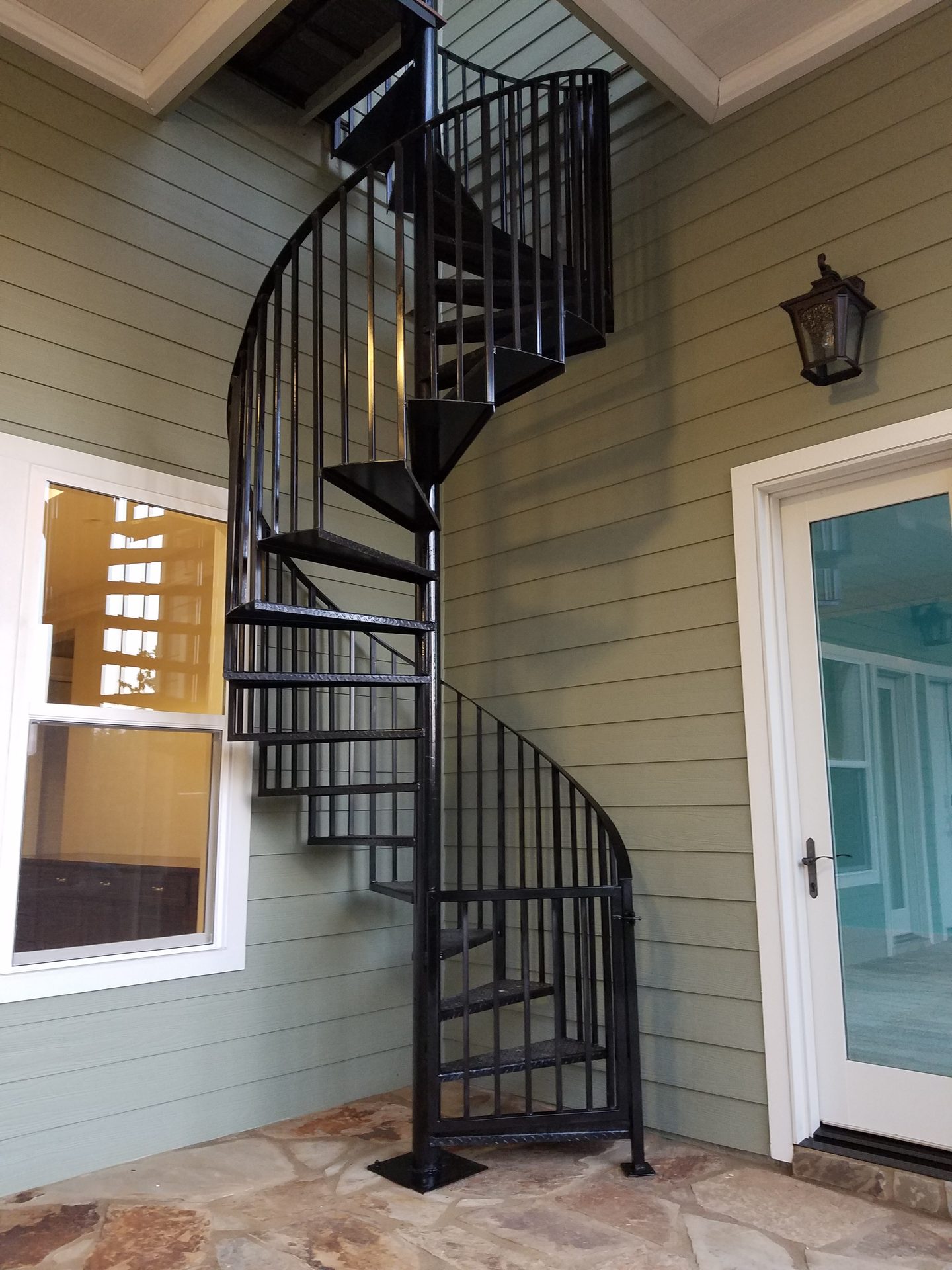
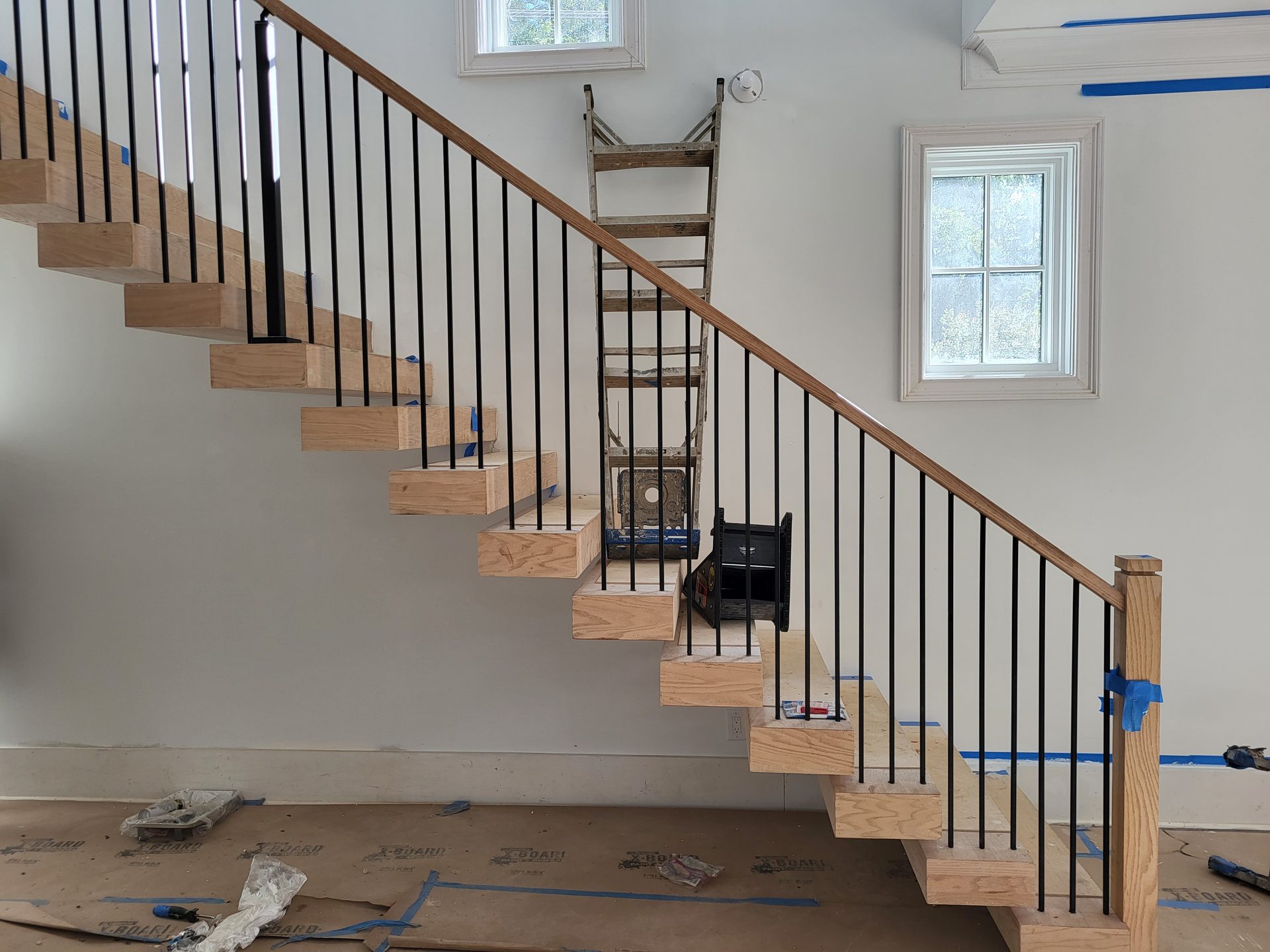
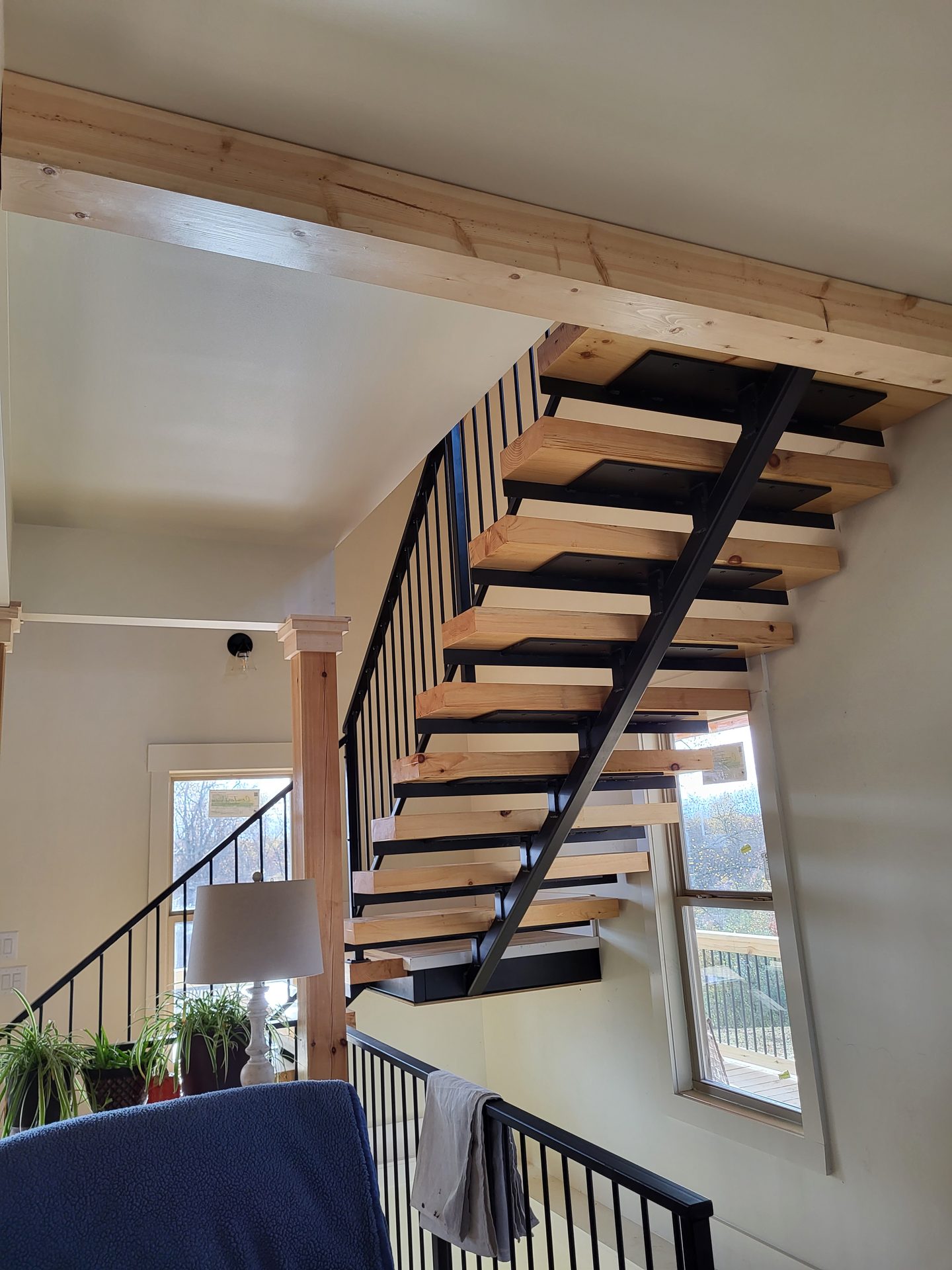
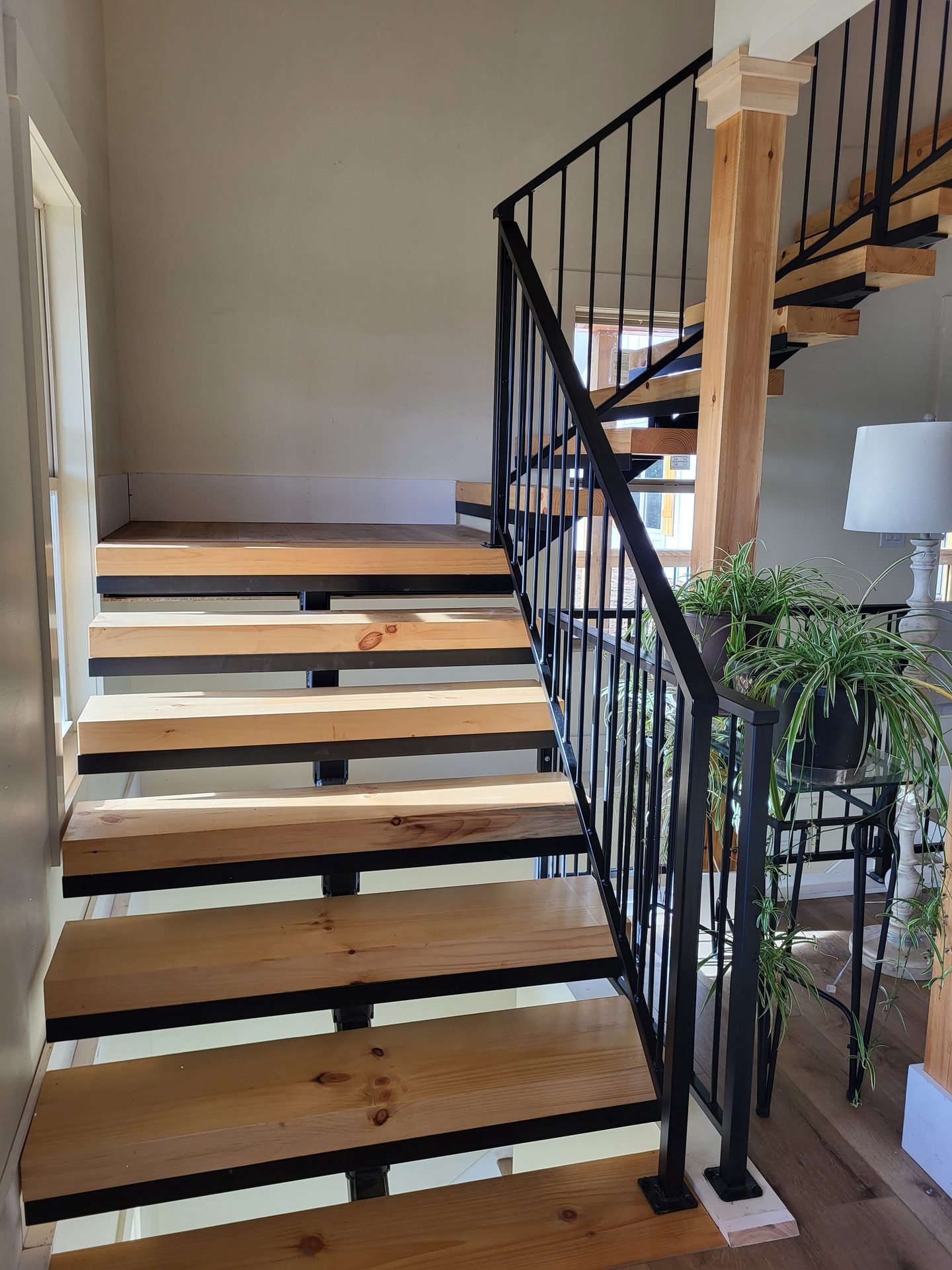
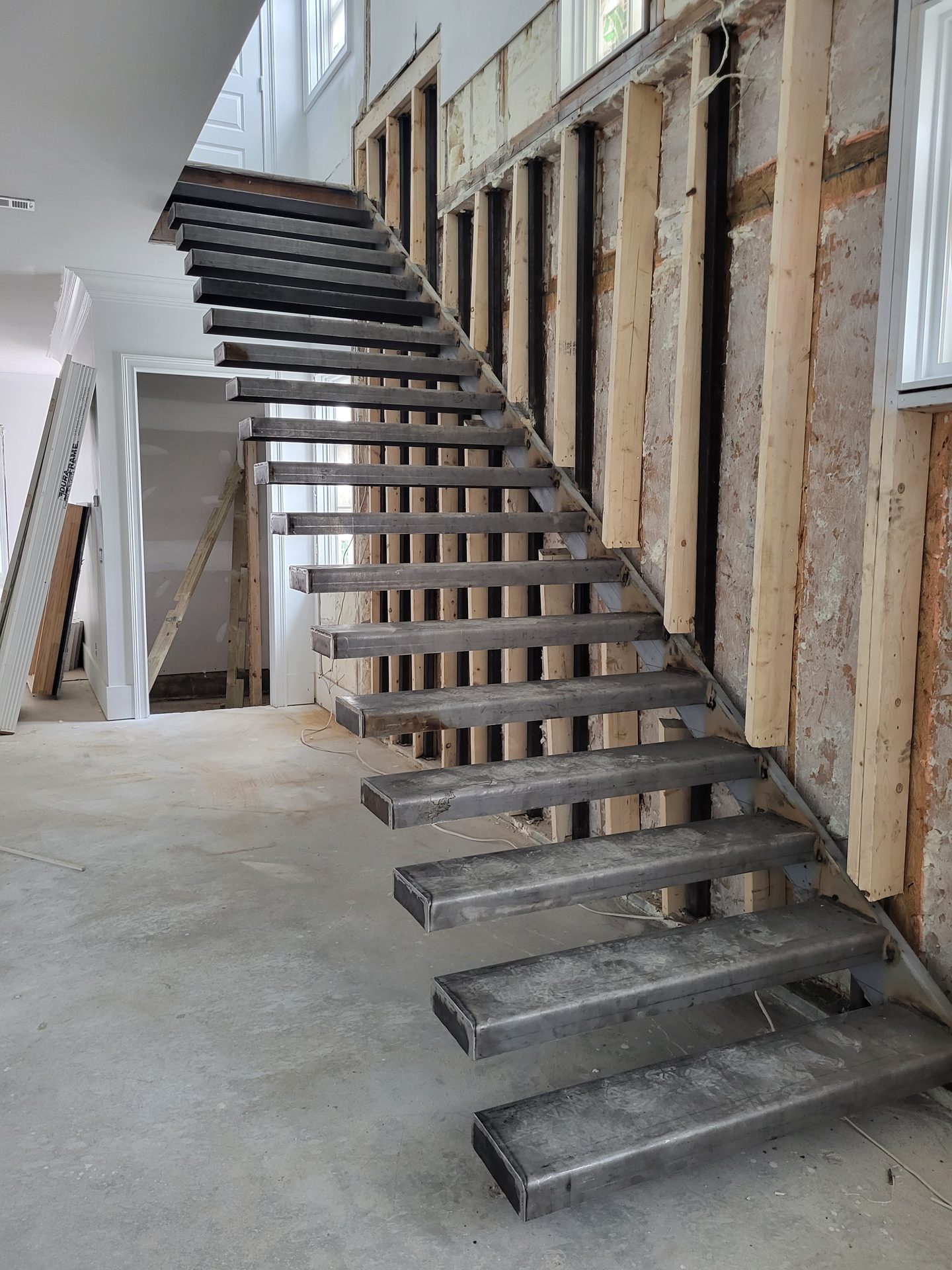
Open-riser floating staircases look effortless. The engineering behind them is anything but. Every floating stair we build is structurally calculated, fabricated in our Cleveland, GA shop, and installed by the same team that welded it. That's why ours don't bounce, don't squeak, and don't need to be braced after a year.
What makes a great floating staircase
- Mono-stringer or dual-stringer construction — chosen based on span, load, and design intent
- Tread design — solid steel plates with wood inlays, full hardwood treads, perforated steel, or open grating
- Custom railing options — vertical pickets, horizontal cables, glass panels, or a clean open look with just a handrail
- Finish options — powder coat in any color, raw steel with clear coat for an industrial look, or painted to match interior trim
- Engineered structurally — the floor mount, wall attachment, and stringer sizing are calculated for your specific span and the load code your inspector expects
Every floating stair project starts with a site visit. We measure the opening, look at the connection points, talk through your design preferences, and walk you through what's possible. Then we send a fabrication drawing for your approval before we cut anything.
Why we get called for floating stairs from across three states
Floating staircases are the project that separates real fabrication shops from "we'll figure it out" outfits. They demand structural engineering, precise tolerances, and an install team that knows what they're doing on a finished floor in someone's living room. We've been doing them long enough that we've seen — and built — almost every configuration that's possible.
We've built floating stairs for homes in Cleveland, Gainesville, Dahlonega, Helen, and across the southeast.